God Sent His Son: I John 4:7-19 part 2

“By this the love of God was manifested in us, that God has sent His only begotten Son into the world so that we might live through Him.  In this is love, not that we loved God, but that He loved us and sent His Son to be the propitiation [sacrifice] for our sins.  Beloved, if God so loved us, we also ought to love one another” (I John 4:9-11).

God demonstrated His love for us by sending His Son, Jesus, into the world.  Twice in this passage, God “sent His Son”.  We are very familiar with “God sent His Son to be the sacrifice”.  But are you as familiar with “God sent His Son that we might live through Him”? (vs 9).

Jesus came, not just to take away our sins (Praise the Lord, He did!!!), but also to impart life to us.  As I have written many times, Jesus did not come to make bad people good.  He came to make dead people alive.  He gave us His life so that we “might live through Him.”

“Living through Christ” is not in some distant future.  “Living through Christ” is not just the description of our one-time entry into eternal life.  Living through Him is our present reality as Jesus lives His life through us by His indwelling Spirit.

The continuing topic of love is woven throughout these verses.  Love’s origin was in God, not in us.  Love only arrived in us “through Him”.  And we demonstrate His love living in us when we “love one another”.

God is Love: I John 4:7-19 part 1

“Beloved, let us love one another, for love is from God; and everyone who loves is born of God and knows God.  The one who does not love does not know God, for God is love.” (I John 4:7-8)

We have learned previously that there is one requirement to become born of God, to become a child of God, to become part of God’s family.  And the requirement is this: “Whoever believes that Jesus is the Christ is born of God” (I John 5:1).

Jesus reiterated this invitation to believe in Him many times in the gospels, including with a laser focus in the gospel of John.  “He who believes is born again, is born to eternal life, is born of God” … is the gospel message of Jesus Christ.

So how do we look at our opening passage that seems to add another requirement.  Does “everyone who loves is born of God” add loving others as a requirement to joining God’s family?  The short answer is no.

The order of events and our connection to God as our Father are critical to understanding the flow of these verses.

Look at the last phrase of our passage.  “God is love” is the most succinct description of God’s essence.  Love is not one of God’s attributes.  It is His identity.  Love is God’s essence.  Love describes who God is.

So with “God is love” as our starting point, let’s think through these verses in this order:

  1. Love is God’s essence.
  2. Because you are “born of God” (not by how well you love, but by your faith in Jesus), love is now your essence.
  3. When you express your essence, express the love of God to others, you are living out what is already true about you; that you know God and are born of God.
  4. Believers have the choice to NOT express their essence. When we do not love, we are not removed from God’s family.  We are merely not showing in practice what is true about us in reality; that we know God and are born of God.
  5. The one who does not know God (i.e. is not born of God) does not have the essence of love to express.
  6. The highest practice of the essence of God’s love in us is to “love one another”.

Therefore, let us love one another.  And the incredible beauty of it all is that by virtue of your new nature, your new Spirit, your new heart, your new power, and so much more, you have what it takes to love as God loves!

The Storm on the Outside / Inside

Here is one more thought to add to yesterday’s post about the promise of Jesus’ “I’m here” in the midst of your storm.  We talked about the importance of our faith in believing Jesus’ “I’m here” when the storm is swirling around us.

I think it is significant that Jesus was asleep in the storm.  It wasn’t to appear not to care.  I think it was to demonstrate that there was no storm in Him.  He was perfectly calm and restful.  And in a miracle of incredible dimension, He spoke that calm over the wind and the waves.

The lesson for us is that Jesus can speak that same calm to our storm inside, the wind and waves in our heart.  Can Jesus calm the storm on the outside, the trial we are going through?  Yes, He can!  But when He allows the storm on the outside to rage, His promise to us is still His calm and His presence.

Or said another way, the storm on the outside does not need to become a storm on your inside.  Is that even possible?  Yes, the storm on the outside does not need to become a storm on your inside.  Your inside can experience the peace and calm of the presence of Jesus no matter what is swirling around us.  Will it always be easy?  No, it requires us to exercise our faith, believe that He is here, and to call out to Him in our prayers.

May our answer to Jesus’ question, “Where is your faith?” be, “My faith is in the promise and the presence of my dear Savior, Jesus Christ.”

Jesus Calms the Storm … in You

We have all heard the story in the gospels where Jesus calms the storm.  But let’s dig a bit below the surface and unpack what it means for not just His first-century disciples, but what it means for us and the storms we face.

“When Jesus got into the boat, His disciples followed Him.  And behold, there arose a great storm on the sea, so that the boat was being covered with the waves; but Jesus Himself was asleep.  And they came to Him and woke Him, saying, ‘Save us, Lord; we are perishing!’  He said to them, ‘Why are you afraid, you men of little faith?’ ” (Matthew 8:23-26).

Because we know the rest of the story; because we know what Jesus is going to do next; because we know Jesus as the all-powerful Son of God, we often just zip past the first part of Jesus’ question, “Why are you afraid?”  But in the context of its time and place, it really is borderline absurd.

They are in a huge storm.  The boat is about to be swamped.  Experienced sailors are thinking they are about to perish.  And Jesus calmly asks, “Why are you afraid?”

The disciples, who are slowly discovering who this teacher truly is, had to be thinking, “Are you crazy Jesus?  Have you gone mad?  Look at the storm.  We are about to die.  I think it is pretty obvious why we are afraid.”

But Jesus wasn’t crazy.  The disciples had just witnessed tremendous acts of supernatural healing recorded in the previous verses of Matthew chapter 8.  And Jesus is calmly asking them to have faith in the person and presence of the healer.  Jesus calms the storm without further comment from the disciples and then turns to them with one more question, “Where is your faith?” (Luke 8:25).

And this is where we fit into the story.  As we face the storms of life, where is our faith?  Is our faith in the presence and promise of Jesus?  What I think Jesus is really saying to His disciples in His discussion of fear and faith is, “In the midst of the storm, you have nothing to fear because I am here.”

“I am here” is the powerful promise of Christ to us in the midst of our storms.  “I am here” is the message of Christ in about a hundred places in the New Testament.

  • “I will never leave or forsake you” (Hebrews 13:5).
  • “I am with you always, even to the end of the age” (Matthew 28:20).
  • “Christ in you, the hope of glory” (Colossians 1:27).
  • “Your life is hidden with Christ in God” (Colossians 3:3)
  • “He abides in you and you in Him” (I John 4:15).
  • “I am in My Father, and you in Me, and I in you” (John 14:20).
  • and a bunch of other places.

Please hear this: the promised presence of Jesus, the “I’m here” of Jesus, is yours the minute you believe.  Jesus’ “I’m here” is NOT based on your behavior.  It is based on His secure promise.  He will never leave you because of your failures, challenges, doubts, sins, or anything else.

In the midst of your storm; hear, embrace, and believe the comforting words of your Deliverer, “I’m here.”  This is not wishful or positive thinking to get you through the pain.  It is the secure and beautiful and powerful promise of Jesus to you.

The New Covenant

“And in the same way He took the cup after they had eaten, saying, ‘This cup which is poured out for you is the new covenant in My blood’ “ (Luke 22:20).  Jesus’ death launched the new covenant into action.  And we who believe are the beneficiaries of that covenant.

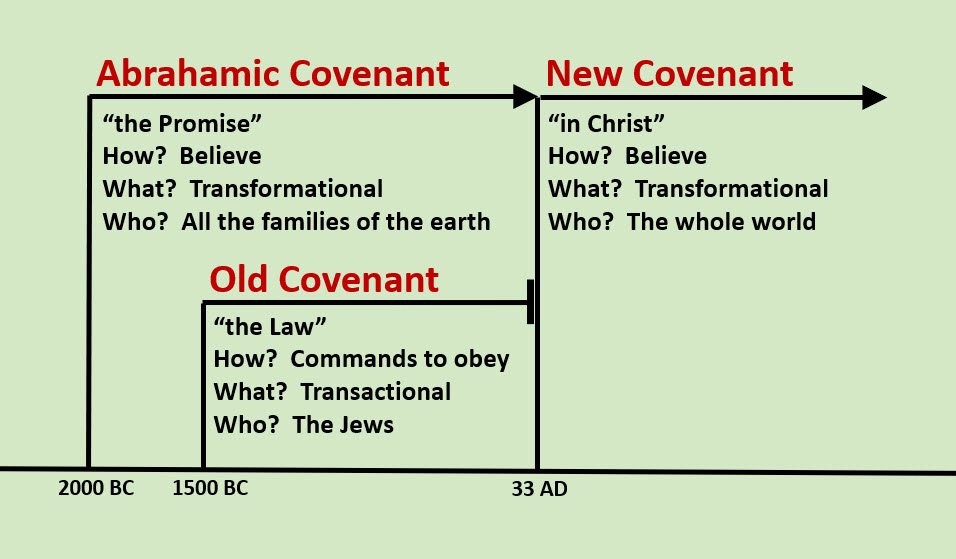
As we have seen in this series, the new covenant is actually a continuation of the covenant promises that God made with our spiritual forefather Abraham.  “Does He who supplies the Spirit to you and works miracles among you do so by works of the law, or by hearing with faith; just as Abraham ‘believed God, and it was counted to him as righteousness’?  Know then that it is those of faith who are the sons of Abraham” (Galatians 3:5-7).

We are sons of Abraham because we enter the promise of the new covenant just as Abraham entered into his covenant arrangement with God; BY FAITH!

“For if Abraham was justified by works, he has something to boast about, but not before God.  For what does the Scripture say?  ‘Abraham believed God, and it was counted to him as righteousness.’  Now to the one who works, his wages are not counted as a gift but as his due.  And to the one who does not work but believes in Him who justifies the ungodly, his faith is counted as righteousness” (Romans 4:2-5).

Let’s add the promise and provision of the new covenant to our covenant comparison.  (AC = Abrahamic covenant, OC = old covenant, NC = new covenant)

1. AC:  It was a covenant based on God’s promise, not Abraham’s action.
OC:  It was a covenant based on man’s obedience.
NC:  It is a covenant based on God’s promise, not our obedience.

2. AC:  It was a promise to bless all the families of the earth, both Jew and Gentile.
OC:  It was only for God’s chosen people at that time; the Jews.
NC:  It is a promise to bless all the families of the earth, both Jew and Gentile.

3. AC:  It was a promise fulfilled in the one who “believed”, not based on religious activity or behavior.
OC:  It was a blessing given based on one’s obedience.
NC:  It is a promise fulfilled in the one who “believes”, not based on religious activity or behavior.

4. AC:  It was a covenant that was transformational, signified by changing Abram’s name to Abraham.
OC:  It was a covenant that was purely transactional; blessing based on obedience, a curse for disobedience.
NC:  It is a covenant that is transformational, not transactional.  We were changed and became new creations by Christ’s finished work on the cross.

5. AC:  It was a covenant between God and God; Abraham was the beneficiary.
OC:  It was a covenant between God and man.
NC:  It is a covenant between God and Jesus; we who believe are the beneficiaries.

Let’s focus for a minute on the transformation part of the new covenant.  Our transformation under the new covenant is way way way more than the name change that Abraham experienced.  We have undergone a new birth and are called a new creation with a new identity and a new Spirit inside and a new heart and a new purity and a new nature and a new self and a new freedom and a new power and so much more.

Believe it, receive it, celebrate it, and thank the Lord for the NEW in you.